
Headless commerce gets discussed in a way that makes it sound either like the obvious future of ecommerce or an overengineered solution to a problem most businesses don’t have. Neither framing is quite right. This architecture is genuinely powerful for a specific set of business needs, and a genuinely poor fit — more expensive, more complex, and harder to maintain — for many others. Understanding what it actually means, what it actually delivers, and who actually benefits is far more useful than treating it as either a trend to chase or a gimmick to dismiss.
What Headless Commerce Actually Means?
Decoupling the Frontend From the Backend
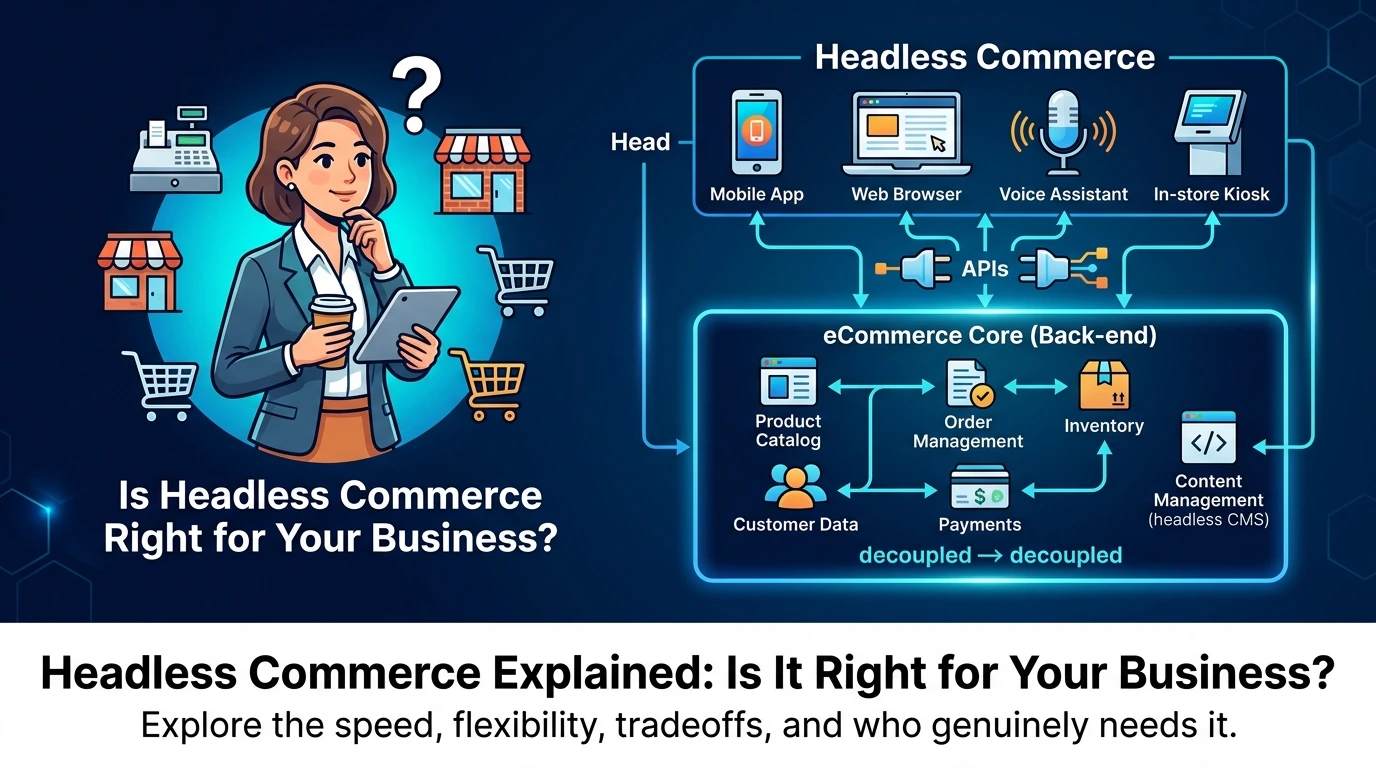
In a traditional ecommerce platform, the frontend (what a customer sees and interacts with) and the backend (product data, inventory, order processing, payment handling) are tightly coupled together as a single system. Headless commerce separates these two layers entirely, connecting them instead through an API — the backend manages all the commerce logic and data, while the frontend becomes an independent layer that can be built, designed, and updated without touching the underlying commerce engine at all. This separation is what “headless” refers to: the “head” (the frontend presentation layer) is detached from the “body” (the backend commerce system).
How This Differs From Traditional Ecommerce Platforms?
A traditional platform like a standard WooCommerce or Shopify installation bundles the frontend templating system directly with the backend commerce functionality, which makes setup considerably simpler but also means any significant frontend customization has to work within the constraints the platform’s templating system allows. A headless ecommerce architecture removes that constraint entirely, since the frontend can be built using virtually any technology or framework, communicating with the backend purely through API calls rather than being bound to a specific platform’s presentation layer.
The Real Benefits
Speed and Performance Gains
Headless architectures, particularly when paired with modern frontend approaches like JAMstack, frequently deliver meaningfully faster page load times than traditional platforms, since the frontend can be optimized, cached, and served independently of the backend’s processing overhead. This performance advantage translates directly into measurable business outcomes — faster sites consistently show better conversion rates and lower bounce rates, and the gap becomes more pronounced as a site’s product catalog and traffic scale up.
Frontend Flexibility and Omnichannel Reach
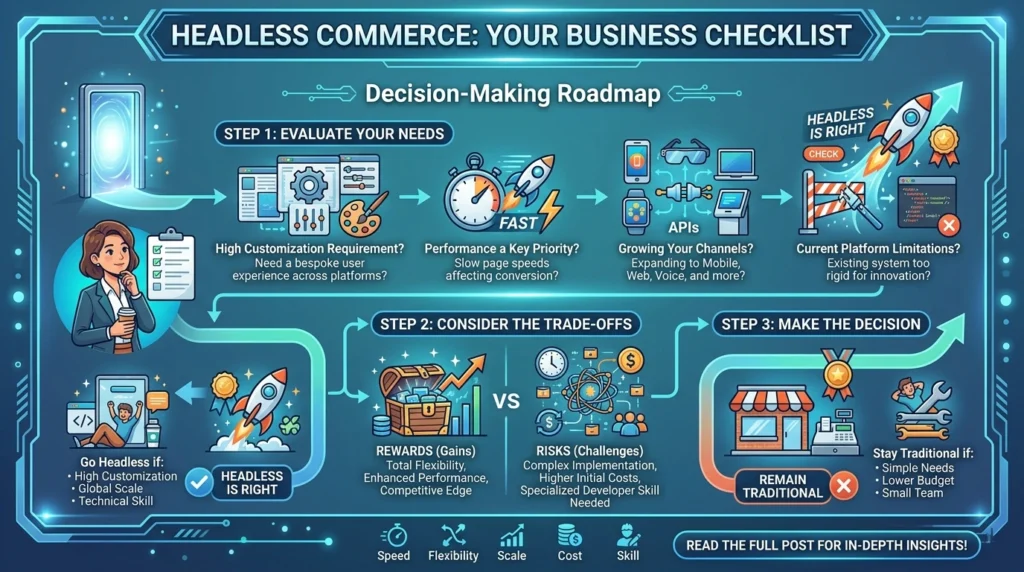
Because the backend exposes commerce functionality purely through an API-first architecture, a single backend can power multiple entirely different frontend experiences simultaneously — a website, a native mobile app, an in-store kiosk, even a voice assistant integration — all pulling from the same product data, inventory, and order system without duplicating that logic across each channel separately. This composable commerce approach makes genuine omnichannel strategy considerably more achievable than trying to keep multiple traditional platform instances synchronized manually across different customer touchpoints.
The Tradeoffs Nobody Mentions
Higher Development Cost and Complexity
The flexibility this architecture offers comes directly at the cost of development complexity. Building a custom frontend from scratch, rather than using a platform’s built-in templating system, requires genuine frontend development expertise and meaningfully more time and budget than configuring a traditional platform’s existing themes. Businesses considering this approach need to honestly weigh this upfront cost against the specific benefits they expect to gain, since the investment only pays off if the flexibility is genuinely needed rather than acquired for its own sake.
Ongoing Maintenance Demands
Beyond the initial build, a headless setup generally requires ongoing technical maintenance that a traditional platform’s more contained ecosystem does not — keeping the custom frontend updated, maintaining the API integration layer, and troubleshooting issues that span both the frontend and backend rather than being contained within a single platform’s support ecosystem. Businesses without an in-house technical team or a reliable agency relationship for ongoing support often find this maintenance burden considerably heavier than anticipated during the initial excitement of a headless build.
Who Actually Needs Headless Commerce (and Who Doesn’t)?
Signs You’re a Good Candidate
A business is generally a strong candidate for this architecture when it has genuinely outgrown what a traditional platform’s templating system can achieve — a need for a highly customized, brand-specific frontend experience that off-the-shelf themes cannot replicate, a genuine multi-channel strategy requiring the same backend to power several distinct customer-facing experiences, or a large enough catalog and traffic volume that the performance gains translate into meaningful revenue impact. Businesses with dedicated development resources, either in-house or through a capable agency, are also better positioned to handle the ongoing complexity headless architecture introduces.
When a Traditional Platform Is Still the Better Choice?
For most small to mid-sized businesses, particularly those just establishing an ecommerce presence or operating with a modest catalog and limited technical resources, a traditional platform remains the more sensible choice. The templating constraints that headless commerce removes are rarely the actual bottleneck holding back a smaller business’s growth, and the added development cost and ongoing maintenance burden of a headless setup often outweighs benefits that would not meaningfully move the needle at that scale. Choosing this route because it sounds more advanced, rather than because a specific business need genuinely requires it, is one of the most common and costly mistakes businesses make in this decision.
What a Decoupled Frontend Looks Like in Practice?
Real-World Implementation Patterns
A decoupled frontend built on this architecture typically pulls product data, pricing, and inventory from the backend through API calls, then renders that data using whatever frontend framework the development team chooses — React, Vue, or a static-site generator paired with a JAMstack approach. This means the visual design, page structure, and user experience are entirely independent decisions from the commerce logic itself, giving designers and frontend developers room to build genuinely custom experiences without ever touching backend commerce code.
Common Technology Combinations
Businesses adopting this approach frequently pair a headless CMS for managing content (blog posts, landing pages, marketing copy) alongside a separate headless commerce backend for product and order data, connecting both to a single unified frontend. This combination allows marketing teams to update content independently of the development team’s release cycle, while the commerce backend continues handling transactions, inventory, and fulfillment without interruption.
Measuring Whether the Investment Paid Off
Metrics That Actually Reflect Headless Commerce’s Value
Businesses that make this architectural investment should track page load speed, conversion rate, and channel-specific performance (web versus app versus any other frontend) before and after the transition, since these are the metrics headless architecture is specifically meant to improve. A business that migrates without seeing meaningful movement in these numbers within a reasonable timeframe should reassess whether the implementation is genuinely leveraging the architecture’s advantages or simply carrying its added complexity without capturing the corresponding benefit.
When to Reconsider the Decision?
If ongoing maintenance costs consistently outweigh the measurable performance and flexibility gains a business is actually using, it is worth honestly reconsidering whether the original decision fit the business’s actual needs or was made based on the technology’s reputation rather than a genuine requirement. Reverting to a more traditional platform is a legitimate option when the added complexity of this approach isn’t translating into proportional business value.
Industries Where This Architecture Shows Up Most
Retail Brands With Complex Omnichannel Needs
Large retail brands operating physical stores, ecommerce sites, and mobile apps simultaneously are among the most common adopters of this approach, since keeping inventory and pricing synchronized across every channel through a single backend genuinely solves a real operational problem at that scale. A retailer opening in-store kiosks that need live inventory data alongside a polished consumer-facing app benefits directly from an architecture built specifically to serve multiple frontends from one source of truth.
Content-Heavy Brands With Custom Design Needs
Brands where the shopping experience is deeply tied to storytelling, editorial content, or a highly distinctive visual identity — certain fashion, beauty, or lifestyle brands — often find that a platform’s standard theme system genuinely constrains what they can build, making the added development investment worthwhile specifically because the frontend experience is core to the brand’s differentiation rather than a secondary consideration.
Frequently Asked Questions
Generally yes, both in initial development cost and ongoing maintenance, since a custom frontend requires genuine development work that a traditional platform’s built-in themes avoid. This higher cost is only worthwhile when the specific flexibility and performance benefits this architecture provides translate into real business value for that specific company.
Not necessarily a large team, but genuine frontend development expertise is required, whether in-house or through a reliable agency partnership, since this architecture removes the built-in templating support a traditional platform provides. Businesses without access to this expertise typically struggle to maintain the setup effectively over time.
Yes, this is a common and often sensible path — starting with a traditional platform while a business is smaller, then migrating to this architecture once the catalog, traffic, or omnichannel needs genuinely justify the added complexity and cost. This avoids paying for the added overhead before the business has grown into needing it.
Composable commerce extends the headless concept further, assembling a commerce stack from multiple specialized, independent services (search, payments, content management, personalization) connected through APIs rather than relying on a single all-in-one backend. The decoupled-frontend approach specifically refers to separating the frontend from the backend, while composable commerce applies similar API-first thinking across the entire technology stack.
Signs include hitting genuine limitations in frontend customization that a platform’s theme system cannot accommodate, needing the same product and inventory data to power multiple distinct customer-facing channels, or reaching a scale where page load performance measurably affects conversion rates. If none of these apply yet, a traditional platform likely still serves the business well.
Ready to Find Out if Headless Commerce Fits Your Business?
Headless commerce delivers real advantages for the right business, and real unnecessary cost and complexity for the wrong one. Creative 4 All helps businesses across Lebanon and the GCC evaluate whether a headless ecommerce architecture genuinely fits their scale and goals, or whether a traditional platform remains the smarter choice. Request an Ecommerce Consultation to get an honest assessment of what your business actually needs.