
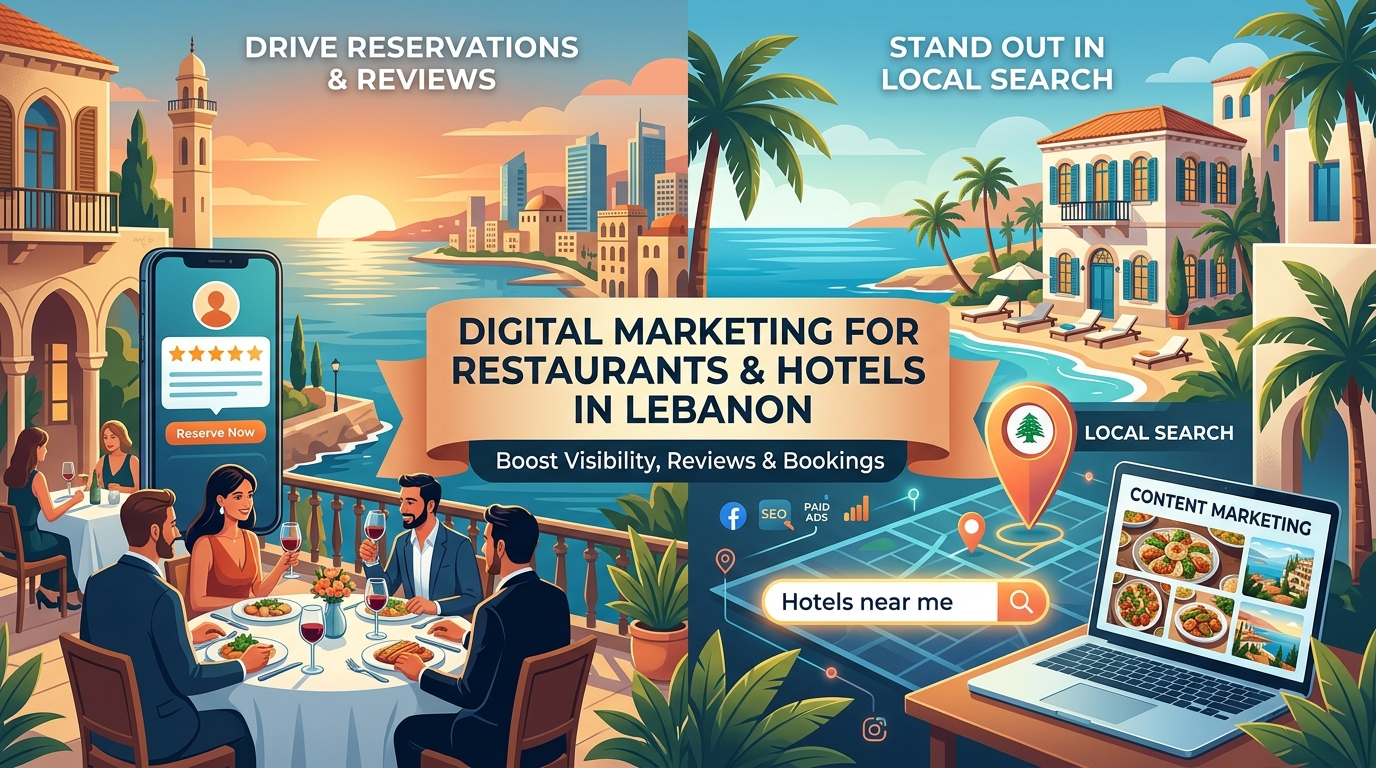
A restaurant with beautiful food photography and thousands of Instagram followers can still sit half-empty on a Tuesday night, while a modest-looking neighborhood spot with strong reviews and solid local search visibility turns tables all evening. Digital marketing for restaurants Lebanon businesses run needs to be judged by a different standard than most other industries, because hospitality lives and dies by two forces that don’t always get the attention they deserve: reviews, which shape trust before a guest ever walks in, and local search, which determines whether a hungry person actually finds a restaurant in the moment they’re deciding where to eat.
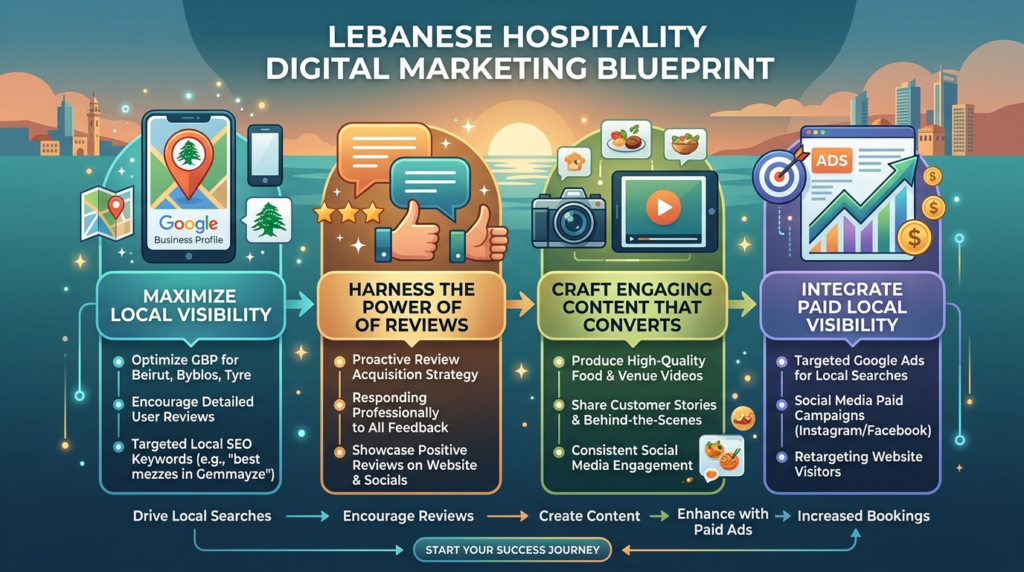
This guide covers why reviews and local search matter more for hospitality than almost any other category, how to build content that actually drives reservations rather than just likes, how organic and paid local visibility work together, and the review-generation and food-content strategies digital marketing for restaurants Lebanon businesses need to turn digital presence into filled tables.
Why Hospitality Lives and Dies by Reviews and Local Search?
A restaurant or hotel decision is fundamentally a trust decision made under time pressure — someone is hungry now, or booking a stay for a specific date, and needs to decide quickly whether a given option is worth the risk of a bad meal or an uncomfortable stay. Reviews resolve that trust question faster than almost any other content a business can produce, since a large volume of recent, positive reviews tells a prospective guest that other people already took that risk and it worked out. This is precisely why review volume, recency, and rating carry outsized weight in hospitality specifically, compared to categories where the purchase decision involves less immediate risk or lower stakes.
Local search compounds this effect, since most hospitality searches — “restaurant near me,” “hotel in Beirut,” “brunch spot Achrafieh” — are inherently location-based and happen at the exact moment someone is deciding where to go. A restaurant with excellent food but poor local search visibility loses to a mediocre competitor that simply shows up first in the local pack, which makes digital marketing for restaurants Lebanon owners invest in genuinely different from generic brand marketing — visibility at the specific moment of decision matters as much as brand awareness built over time.
Multilingual Considerations for Lebanese Hospitality
Digital marketing for restaurants Lebanon hospitality businesses run needs to account for a guest base searching and reviewing across Arabic, English, and French simultaneously, and this affects more than just menu translation. Google Business Profile listings, review responses, and local content should be genuinely accessible in all three languages, since a prospective guest searching in Arabic deserves the same clear, complete information as one searching in English or French, and a business that only optimizes its English presence is invisible to a meaningful share of its actual local audience.
Reviews themselves often arrive in a mix of languages, and responding in the same language the reviewer used — rather than defaulting to a single language for all responses — signals genuine attentiveness rather than a copy-pasted response process. This matters particularly for hospitality businesses courting both a local Lebanese audience and international or diaspora visitors, where a trilingual approach to reviews, content, and local SEO directly reflects the actual composition of the guest base rather than treating one language as the default and others as an afterthought.
Content That Drives Reservations, Not Just Likes
Social media engagement — likes, comments, follower growth — is a leading indicator worth tracking, but it isn’t the actual goal, and content built purely to maximize engagement can end up entertaining an audience without ever converting them into an actual reservation or visit. Content that directly drives bookings tends to look different from purely engagement-optimized content: clear calls-to-action for reservations embedded naturally in posts, content showcasing the actual dining or stay experience rather than only abstract brand aesthetics, and limited-time offers or events that create genuine urgency to book rather than just admire.
Food photography and video content specifically should prioritize appetite appeal and honest representation over purely artistic composition, since content that looks beautiful but doesn’t accurately represent portion size, presentation, or actual dish appearance can create a mismatch between expectation and reality that damages trust rather than building it. Content highlighting genuine guest experiences — real diners, real reactions, real ambiance — tends to drive more actual bookings than heavily staged content, since prospective guests are trying to picture their own experience rather than admire a photoshoot.
Combining Organic and Paid Local Visibility
Organic local SEO — Google Business Profile optimization, consistent NAP information, genuine review generation, and local content — builds the foundational visibility that compounds over time and costs nothing per click once established. Paid local advertising, whether through Google Ads targeting location-based searches or Meta ads targeting a specific geographic radius, fills the visibility gaps organic search alone can’t cover quickly, particularly for a new restaurant or hotel that hasn’t yet built the review volume and search history that organic local visibility depends on.
The two work best as a coordinated strategy rather than a choice between them: paid advertising can drive immediate visibility and bookings while organic local SEO builds toward a stronger long-term foundation, and paid campaigns can specifically target the gaps organic visibility hasn’t yet filled — a new location still building review volume, a slower period needing an extra push, or a specific event or promotion needing fast, guaranteed visibility rather than waiting for organic reach to build.
Booking-Specific Content for Hotels
Hotels face a slightly different version of the same dynamic restaurants deal with, since a booking decision typically involves higher stakes, a longer research window, and comparison across more options before a guest commits. Content addressing the specific questions a prospective guest actually has before booking — room details and honest photos, neighborhood context and what’s actually walkable nearby, cancellation policy clarity — reduces the uncertainty that causes a hesitant browser to close the tab and book elsewhere rather than complete a reservation. Direct booking incentives, communicated clearly on the hotel’s own website and Google Business Profile, also help capture bookings that would otherwise go through a third-party platform charging a substantial commission.
Seasonal and event-based content — highlighting a property during a specific holiday period, a local event driving demand, or a slower season needing extra promotional push — gives a hotel’s content calendar a natural, recurring structure tied to actual demand patterns rather than generic posting for its own sake. This kind of timed, demand-aware content tends to convert better than evergreen brand content alone, since it meets a prospective guest’s actual planning timeline rather than existing independent of it.
Review Generation Strategies
Actively generating reviews rather than passively hoping satisfied guests leave them on their own is one of the highest-leverage activities available to a hospitality business, given how directly reviews influence the local pack ranking and the trust decision a prospective guest makes. Timing matters significantly: asking for a review at the natural high-satisfaction moment — as a guest is finishing their meal, checking out of a stay, or immediately after a genuinely positive interaction — produces meaningfully better response rates than a generic, delayed request sent through an unrelated channel days later.
Making the request genuinely easy — a QR code on the receipt or table, a direct link sent via WhatsApp, a simple verbal ask from staff trained to do it naturally — removes the friction that causes most satisfied guests to simply never get around to leaving a review despite having a positive experience. Responding to reviews, both positive and negative, professionally and promptly signals to prospective guests reading those reviews that the business is actively engaged and takes feedback seriously, which itself becomes a trust signal independent of the review content alone.
Frequently Asked Questions
There’s no fixed threshold, but review volume, recency, and rating all factor into local ranking, so consistent ongoing review generation matters more than reaching any single number and then stopping.
Yes, professionally and without becoming defensive. A thoughtful public response to a negative review often reassures prospective guests more than the negative review itself concerns them, since it demonstrates the business takes feedback seriously.
Both matter for different reasons — Instagram builds brand awareness and showcases the experience, while Google Business Profile directly drives the in-the-moment local search visibility that captures someone actively deciding where to eat right now.
This depends on the specific business and goals, but a modest, geographically targeted campaign can meaningfully fill visibility gaps for a new location or slower period without requiring a large overall budget.
Genuine, appetizing food content that accurately represents the actual dining experience does influence booking decisions, particularly for a first-time guest deciding between several options, though it should support rather than replace the trust-building work reviews and local visibility do.
Ready to Turn Digital Presence Into Filled Tables?
Reviews and local search visibility drive hospitality decisions more directly than almost any other marketing channel. Book a free digital marketing consultation with Creative 4 All and build a strategy that turns your restaurant or hotel’s online presence into actual reservations.