
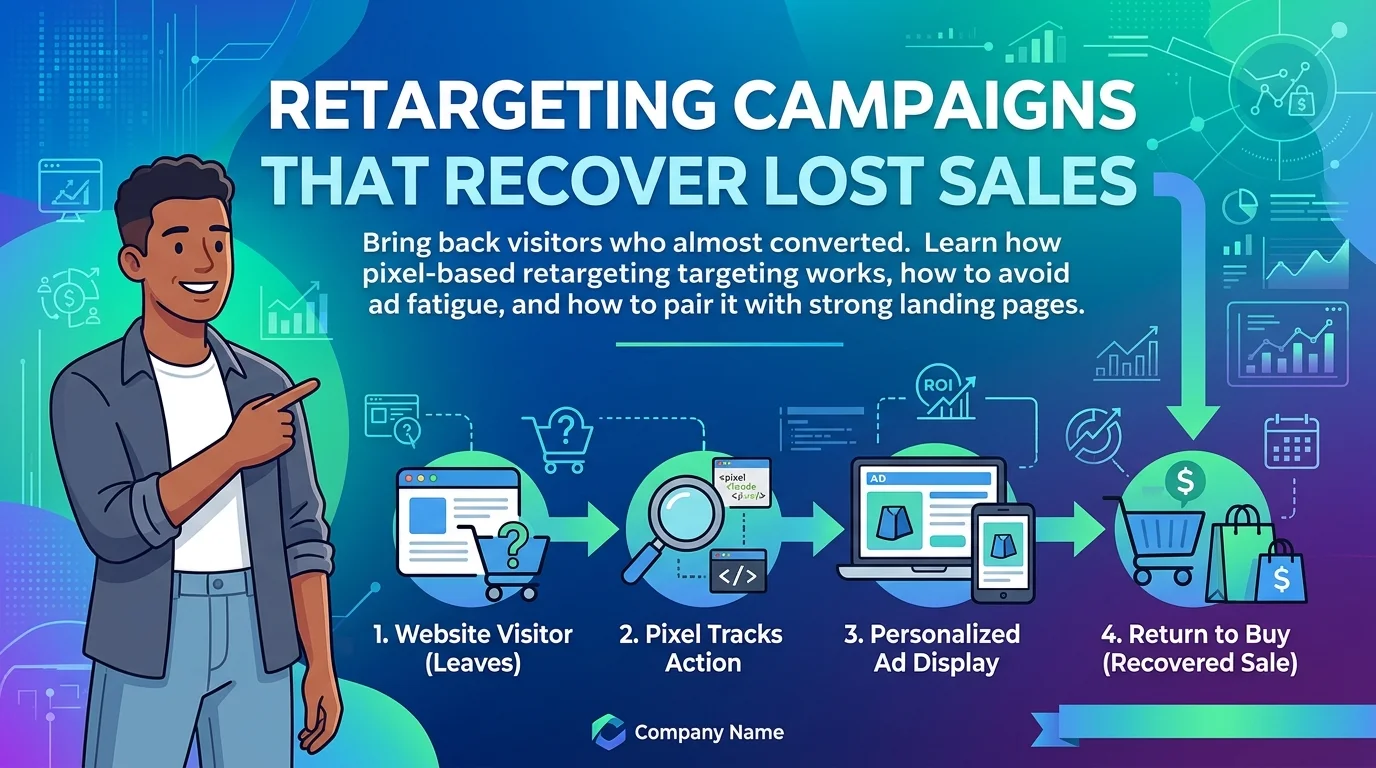
Most businesses running paid traffic accept a hard truth without fully acting on it: the overwhelming majority of first-time visitors leave without converting, regardless of how well-targeted the original ad was. Retargeting campaigns exist specifically to recover a meaningful share of that lost traffic, following up with visitors who showed real interest but didn’t convert on the first visit. This article moves past defining retargeting in the abstract and focuses on the practical tactics that actually recover lost sales — how the pixel mechanism works, how to prevent ad fatigue, and how retargeting connects to landing page performance.
Why Most First-Time Visitors Don’t Convert?
The Reality of the First Visit
A first-time visitor arriving from an ad is rarely ready to convert immediately, even when genuinely interested — they may be comparing options, need to check with someone else before committing, or simply got distracted before completing an action they fully intended to finish. This is not a sign of poor targeting or a weak offer; it reflects how people actually make purchasing and inquiry decisions, particularly for anything beyond the simplest, lowest-commitment offers.
What This Means for Ad Spend?
Treating every ad click as a single, isolated opportunity to convert wastes the value already paid for that click, since a visitor who leaves without converting represents money spent with no return unless a follow-up mechanism exists to bring them back. Retargeting campaigns capture this otherwise-lost value by continuing to reach visitors who already demonstrated interest, which is why retargeting typically produces a meaningfully better cost per conversion than campaigns targeting cold audiences who have never interacted with the business at all.
How Pixel-Based Retargeting Actually Works?
The Pixel Mechanism Explained
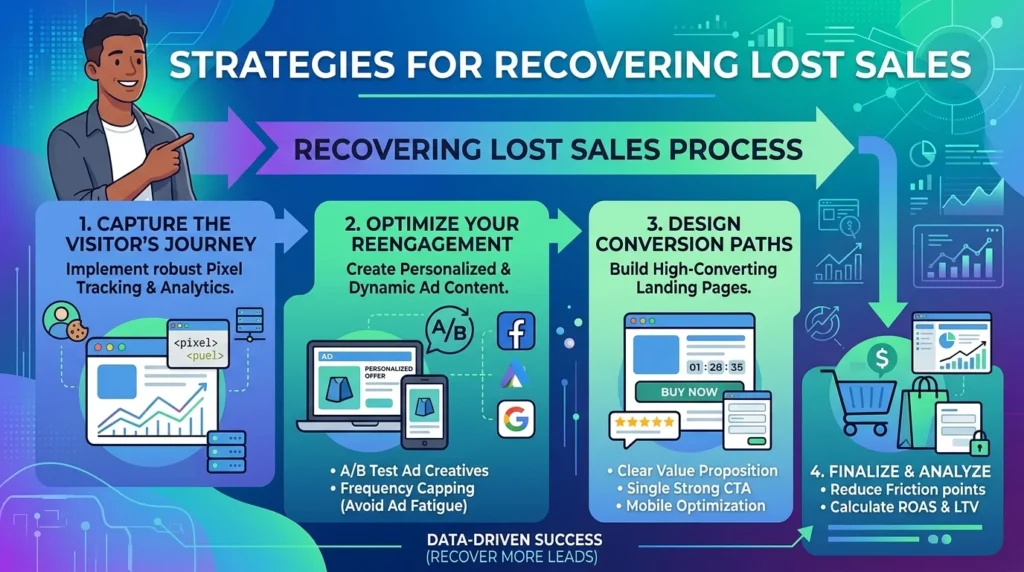
A small piece of tracking code, called a pixel, gets placed on a website and fires whenever a visitor loads a page, recording that visit anonymously to the advertising platform running the pixel. This visitor then becomes part of a retargeting audience the platform can serve ads to as they browse other websites or use other apps, effectively following up with them after they’ve left the original site without requiring any additional action from the business beyond maintaining the initial pixel installation.
Dynamic Ads vs. Static Retargeting
Static retargeting shows the same ad creative to everyone in a retargeting audience regardless of what they specifically viewed, while dynamic retargeting ads automatically populate with the exact products or services a specific visitor actually looked at, creating a considerably more relevant and personalized follow-up experience. Dynamic retargeting generally requires a product feed connected to the advertising platform but typically produces meaningfully higher conversion rates than static retargeting precisely because the ad reflects genuine individual browsing behavior rather than a generic message shown to everyone.
Setting Frequency Caps to Avoid Ad Fatigue
What Ad Fatigue Looks Like?
Ad fatigue occurs when a specific visitor sees the same retargeting ad so many times that it stops working as intended and instead starts generating irritation, negative brand sentiment, or ads being actively hidden or reported by frustrated users. This is a genuine risk specific to retargeting, since the same relatively small audience gets shown ads repeatedly over an extended period, unlike broader campaigns reaching a constantly refreshing pool of new people.
Practical Frequency Cap Guidelines
Setting a frequency cap — a limit on how many times a specific person sees an ad within a given time period — prevents this fatigue from developing, with a reasonable starting point often falling in the range of a few impressions per week per person rather than allowing unlimited repeated exposure. Monitoring actual campaign performance and adjusting this cap based on observed engagement decline, rather than setting it once and never revisiting it, keeps a retargeting campaign effective over its full duration rather than degrading silently as fatigue accumulates.
Combining Retargeting With Strong Landing Pages
Why Retargeting Alone Isn’t Enough?
A retargeting ad’s entire job is getting a previously interested visitor to click again, but that click still needs to land somewhere genuinely capable of completing the conversion the first visit failed to achieve. Sending retargeted clicks back to the same generic page that failed to convert them the first time wastes much of retargeting’s potential value, since nothing about the actual conversion experience has changed even though the visitor is now seeing the business a second time.
The Retargeting-to-Landing-Page Connection
A well-designed retargeting strategy sends returning visitors to a landing page specifically built to address whatever likely caused the original hesitation — additional social proof for a visitor who left during consideration, an urgency-driven offer for a visitor who seemed ready but didn’t complete a purchase, or a simplified form for a visitor who may have abandoned due to friction. This connection between retargeting ad and landing page destination is where a genuinely strong recovery campaign is built, rather than treating the ad click itself as the entire strategy.
Building a Complete Remarketing Strategy Around Lost Visitors
Segmenting Audiences by Behavior, Not Just Visit Count
A genuinely effective remarketing strategy segments visitors by what they actually did on the site rather than treating every past visitor identically — someone who added a product to cart but didn’t purchase represents a fundamentally different opportunity than someone who only viewed a homepage briefly. Building separate retargeting audiences for these distinct behaviors, each with messaging tailored to that specific level of demonstrated interest, produces considerably better results than a single undifferentiated retargeting audience receiving the same generic message regardless of how close they actually came to converting.
Layering Retargeting Across Multiple Platforms
A complete remarketing strategy often layers retargeting across more than one advertising platform — a visitor who doesn’t respond to a retargeting ad on one platform may still respond to a similar ad encountered later on a different platform they use regularly. This cross-platform approach increases the overall chance of recapturing a specific lost visitor without necessarily increasing frequency on any single platform to the point of triggering ad fatigue.
Abandoned Visitor Recovery Beyond Standard Ad Retargeting
Cart Abandonment as a Specific Recovery Opportunity
Abandoned visitor recovery for ecommerce specifically often extends beyond ad-based retargeting into abandoned cart email sequences, which can run alongside retargeting ads to reach the same lost visitor through multiple channels simultaneously. A visitor who abandoned a cart represents some of the highest-value recovery potential available, since they progressed further through the purchase decision than someone who merely browsed, making this specific segment worth particular attention within a broader recovery strategy.
Coordinating Email and Ad-Based Recovery Efforts
Coordinating abandoned visitor recovery across both email and retargeting ads, rather than running each channel independently without awareness of the other, prevents the common mistake of over-messaging a specific lost visitor across too many channels simultaneously while under-messaging others. A business tracking which recovery channel actually converts a specific type of lost visitor can allocate budget and messaging effort more efficiently over time.
Frequently Asked Questions
This depends on the typical length of the buying decision for a specific product or service, but many retargeting campaigns run effectively for two to four weeks after the initial visit, with the retargeting audience naturally refreshing as visitors either convert or age out of the window. Longer sales cycles may benefit from extending this window further.
Retargeting effectiveness scales with the volume of visitors a website receives, since a very small pool of past visitors limits how large a retargeting audience can be. Businesses with lower traffic volume can still benefit, though the absolute scale of recoverable conversions will naturally be smaller than for a high-traffic site.
Reasonably frequency-capped, relevant retargeting is generally well-tolerated by most users, particularly when the ads reflect genuine products or services the visitor actually viewed. Excessive frequency or ads following someone for months after a single visit is where retargeting tends to cross into genuinely irritating territory.
The terms are often used interchangeably in casual conversation, though some platforms use “remarketing” specifically for email-based follow-up campaigns and “retargeting” specifically for ad-based follow-up. In practice, both refer to the same core strategy: reaching people who have already interacted with a business rather than a cold audience.
Yes, since retargeting audiences are inherently smaller and more targeted than cold prospecting campaigns, they generally require less overall spend to run effectively while often producing a stronger cost per conversion. This makes retargeting one of the more budget-efficient tactics available within a broader paid media strategy.
Ready to Recover the Sales Your Current Traffic Is Already Leaving Behind?
Retargeting campaigns recover value from traffic a business has already paid for, rather than requiring entirely new spend to reach cold audiences. Creative 4 All builds pixel-based retargeting strategies paired with conversion-focused landing pages for businesses across Lebanon and the GCC. Get a Free PPC Account Review to see how much recoverable value your current traffic might be leaving on the table.