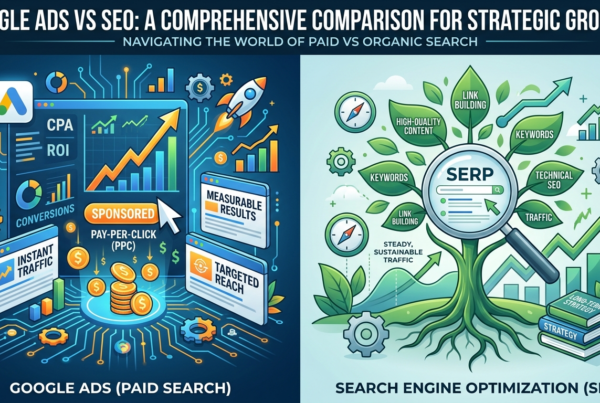

A property listing that takes three months to rank organically for its target neighborhood search is a real problem for an agency that needs leads this quarter, not next year. PPC for real estate solves exactly this timing gap — while organic SEO compounds toward long-term, sustainable visibility across the full range of neighborhood-and-property-type searches, paid campaigns can generate qualified leads within days of launch, targeting the exact same high-intent searches organic content is working to earn over time.
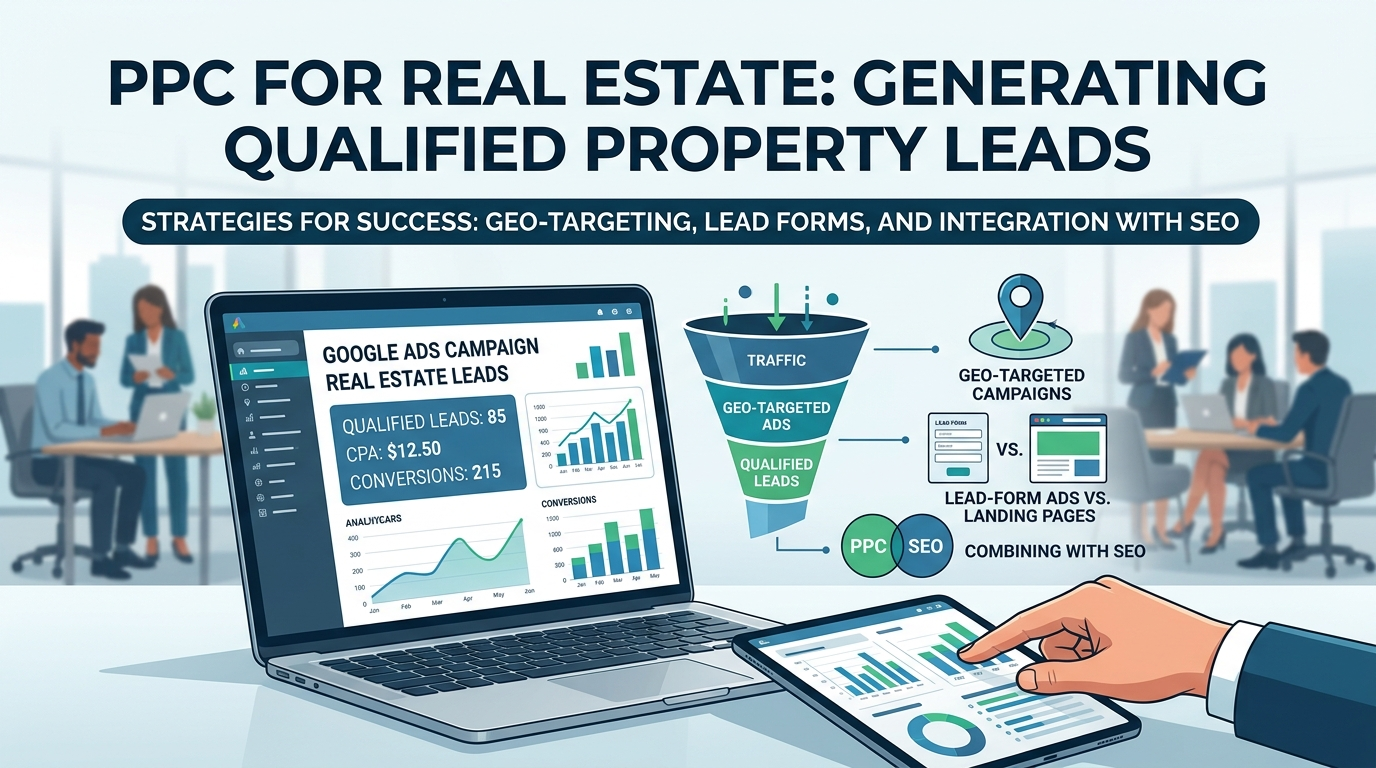
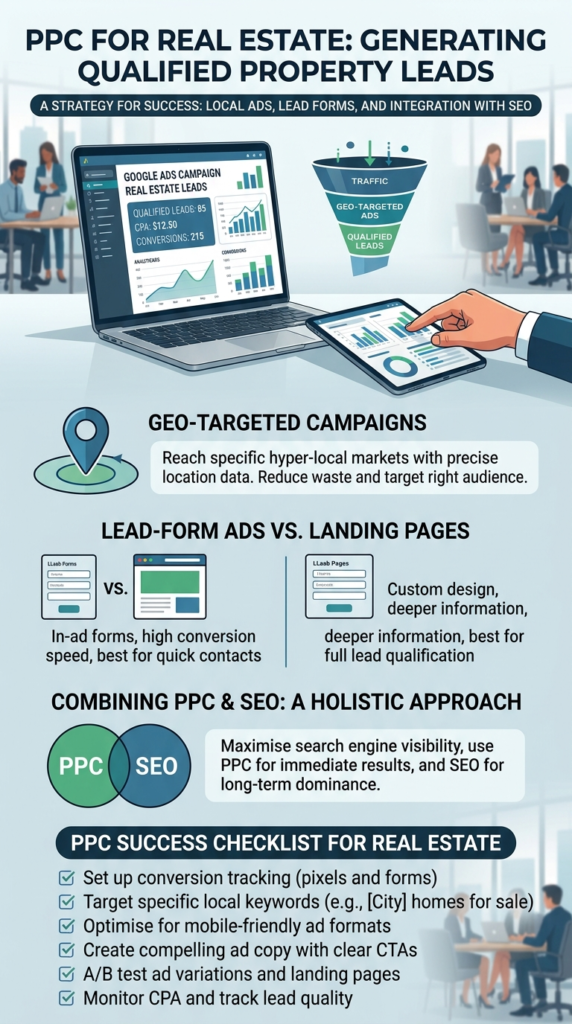
This guide covers why real estate leads respond particularly well to PPC, how to structure geo-targeted campaigns around the neighborhood-and-property-type combinations that actually drive property searches, when lead-form ads outperform sending traffic to a landing page, and how to combine paid campaigns with an existing real estate SEO strategy rather than running the two in isolation.
Why Real Estate Leads Respond Well to PPC?
Real estate is a category where purchase or rental intent is unusually explicit in the search query itself — someone searching “apartment for rent Achrafieh” or “villa for sale Beit Mery” has already made several meaningful decisions about what they want, narrowing the targeting work an ad campaign needs to do compared to categories where search intent is vaguer or more exploratory. This explicit intent means PPC for real estate campaigns can achieve genuinely strong lead quality without needing extensive audience research or broad targeting guesswork, since the search term itself does most of the qualifying work.
The visual nature of real estate also plays directly to PPC’s strengths: property ads featuring strong photography and clear pricing or key details tend to perform well specifically because the format lets a prospective buyer or renter self-qualify immediately based on what they see, clicking through only when the specific property genuinely matches what they’re looking for. This self-qualification reduces wasted spend on clicks unlikely to convert, which is precisely why real estate PPC campaigns often achieve stronger cost efficiency than campaigns in categories with less visually explicit purchase decisions.
Structuring Geo-Targeted Campaigns
Given how combinatorial real estate search behavior is — neighborhood plus property type plus transaction intent — campaign structure should mirror that same combinatorial logic rather than running one broad, undifferentiated campaign covering all neighborhoods and property types together. Separate ad groups or campaigns organized around specific neighborhood-and-property-type combinations allow for tightly matched ad copy, precise geo-targeting radius settings, and individual budget and bid management for combinations that perform differently from each other.
Geo-targeting itself needs careful configuration beyond simply selecting a city or region: setting a radius appropriately tight around the specific neighborhood being targeted avoids wasting budget on searchers outside the realistic service area, while still allowing enough reach to capture people actively searching from a slightly broader area who are genuinely interested in that specific neighborhood. Excluding irrelevant nearby areas that share a name pattern but represent a different market entirely prevents the kind of geographic mismatch that quietly wastes budget on clicks with no realistic path to conversion.
Budget Allocation Across Neighborhoods and Property Types
Because real estate search demand is spread across dozens of neighborhood-and-property-type combinations rather than concentrated in one or two terms, PPC for real estate budget allocation needs its own deliberate strategy rather than an even split across every possible combination. Higher-value property types and neighborhoods — luxury apartments, commercial spaces, areas with strong transaction volume — typically justify a larger share of budget given the higher potential commission or fee per closed deal, even when the cost per click for those searches runs higher than lower-value combinations.
Testing budget across a broader initial set of combinations, then reallocating toward whichever specific neighborhood-and-property-type pairings actually produce the best cost per qualified lead, prevents a common mistake of committing significant budget to an assumed high-value combination before confirming it actually performs well with real campaign data. This iterative reallocation approach — start broad, measure, then concentrate budget on proven performers — produces meaningfully better overall campaign efficiency than a fixed allocation decided purely on assumptions before any data exists.
Lead-Form Ads vs. Landing Pages
Lead-form ads, which capture contact information directly within the ad platform itself — Meta lead ads in particular — reduce friction by eliminating the extra step of navigating to and completing a form on an external landing page, often producing a higher volume of leads at a lower cost per lead. The tradeoff is lead quality: the reduced friction that increases volume also makes it easier for a less genuinely interested person to submit the form with minimal commitment, which means lead-form ad campaigns typically require more thorough follow-up qualification before a sales team invests significant time in each lead.
Landing pages add friction back into the process, but that friction serves a filtering function: a prospective buyer willing to click through to a dedicated property page, review additional details or photos, and then complete a more detailed inquiry form has demonstrated a meaningfully higher level of genuine interest than someone who submitted a lead form with a single tap. The right choice between the two approaches depends on what a specific campaign is optimizing for — lead-form ads for maximizing volume and top-of-funnel awareness, landing pages for higher-intent, more qualified leads further along in their decision process.
Combining PPC With an Existing Real Estate SEO Strategy
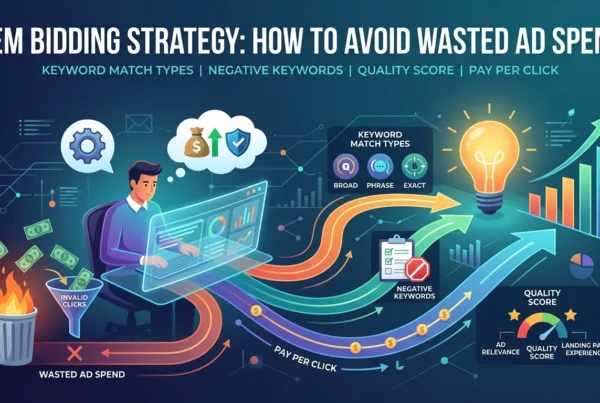
PPC and SEO work best together rather than as competing budget lines, particularly in real estate where the same neighborhood-and-property-type combinations matter for both channels. Paid campaign performance data — which specific combinations generate the highest-quality leads at the lowest cost — directly informs which neighborhood pages deserve the deepest SEO content investment, since a combination proving strong commercial value through paid data is worth building sustainable organic visibility for as well.
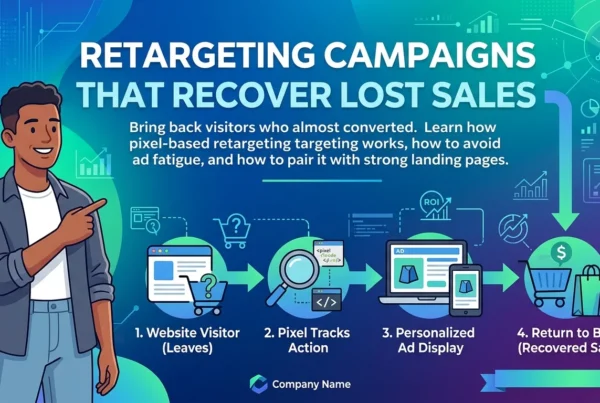
This coordination also works in the other direction: as organic rankings strengthen for specific neighborhood-and-property-type pages, paid spend on those same combinations can gradually decrease, since strong organic visibility reduces dependence on paid clicks to maintain the same overall search presence. Rather than treating PPC as a permanent cost center, a coordinated strategy uses it as both an immediate lead source and a real-time signal for prioritizing where SEO investment will pay off fastest.
Frequently Asked Questions
This varies significantly by neighborhood competitiveness and property type, but real estate’s explicit search intent generally produces more favorable cost per lead than categories with vaguer purchase intent, particularly when campaigns are tightly geo-targeted rather than broadly scoped.
Not necessarily individual listings, since properties come off the market relatively quickly — campaigns structured around neighborhood-and-property-type combinations tend to be more sustainable and easier to manage than campaigns tied to individual, temporary listings.
Both have a place — lead-form ads work well for maximizing volume and early-stage awareness, while landing pages work better for higher-intent leads further along in their decision process, and many effective real estate strategies use both for different campaign objectives.
PPC can generate qualified leads within days of campaign launch, compared to the months typically required for organic SEO to build meaningful ranking visibility, which is exactly why the two work well as complementary rather than sequential strategies.
Yes — paid campaign performance reveals which specific search combinations generate genuine commercial value, information that directly informs which neighborhood and property type pages deserve the most SEO investment and content depth.
Ready to Generate Qualified Leads While Your SEO Builds?
Real estate PPC and SEO work best as a coordinated strategy, not competing budget lines. Get a free PPC account review from Creative 4 All and find out how PPC for real estate campaigns can generate leads today while your organic visibility compounds for the long term.