
The single biggest predictor of whether a website project runs smoothly is not the agency chosen or the budget available — it is whether the business walked into the first conversation with a clear brief. A vague starting point (“we need a modern website”) forces an agency to spend the first several weeks extracting basic information through back-and-forth meetings, delaying real design and development work and often inflating cost along the way. This article walks through exactly what a good brief includes and provides a practical template ready to fill in before your first agency conversation.
Why a Clear Brief Saves Time and Budget?
What Happens Without One?
Without a brief, an agency has to guess at goals, audience, and scope, or spend billable discovery time asking questions a prepared client could have answered upfront. This uncertainty tends to produce scope creep later in the project, as requirements that should have been clarified at the start instead surface midway through development, requiring rework that costs both time and money.
How a Good Brief Speeds Up the Sales Cycle?
A business that arrives at an agency conversation with a genuine brief — not a polished document, just clear thinking about goals, audience, and content — gets a meaningfully faster, more accurate quote, since the agency can scope the actual work rather than a generic estimate padded to account for unknowns. This is precisely why how to brief a web design agency well matters even before a contract is signed: it directly shortens the distance between first contact and a project actually starting.
The Essential Sections of a Good Web Design Brief
Goals and Success Metrics
Start with what the website is actually meant to achieve — generating leads, selling products directly, building brand credibility, supporting an existing sales team — since this single decision shapes almost every other choice in the project. Attach a rough success metric where possible (a target number of monthly leads, a specific conversion rate) rather than leaving the goal entirely qualitative, since a measurable goal gives the agency something concrete to design toward.
Audience and Stakeholders
Describe who the website actually needs to serve — the specific customer segments, their typical concerns, and how they currently find or evaluate a business like yours — along with who internally needs to approve design and content decisions. Identifying decision-makers upfront prevents the common and costly scenario where a nearly finished design gets significantly reworked because a stakeholder who should have weighed in earlier finally sees it near launch.
Content Readiness
State honestly where content currently stands — fully written and ready, partially drafted, or not started at all — since content readiness affects both timeline and, in some cases, budget if the agency needs to write copy rather than simply implementing content the client provides. Businesses that underestimate how long content actually takes to prepare are one of the most common sources of website project delays.
Design References
Include two or three examples of websites (competitors or otherwise) whose visual style, layout approach, or specific features you genuinely like, along with a brief note on what specifically appeals about each one. Vague direction like “modern and clean” means something different to every designer, while concrete references narrow that gap considerably and reduce the number of design revision rounds needed to converge on the right direction.
Timeline Expectations
State any genuine deadline driving the project (an event, a product launch, a fiscal year) as well as your general flexibility if no hard deadline exists. Being upfront about timeline constraints allows an agency to flag immediately whether a desired scope is realistic within that window, rather than discovering a mismatch partway through the project.
Common Briefing Mistakes
Being Too Vague
The most common mistake is providing a brief so general that it functions as a vague inspiration board rather than a genuine set of requirements — “we want something professional that converts well” gives an agency almost nothing concrete to design against. Specificity, even imperfect specificity, produces a far more useful starting point than polished but empty generalities.
Skipping Content Planning
Many businesses treat content as something to figure out after design begins, which frequently causes significant rework once actual page content reveals that the planned layout does not accommodate what actually needs to be said. Thinking through content structure, even at a rough outline level, before finalizing design direction prevents this costly late-stage mismatch.
Unrealistic Timelines
A business requesting a fully custom, feature-rich website in two weeks sets up a mismatch between expectations and what is genuinely achievable, and a good agency should flag this immediately rather than accepting an unrealistic scope only to disappoint later. Building in a reasonable buffer, rather than assuming everything will go perfectly on the first attempt, produces a considerably smoother project overall.
Downloadable Template
What’s Included
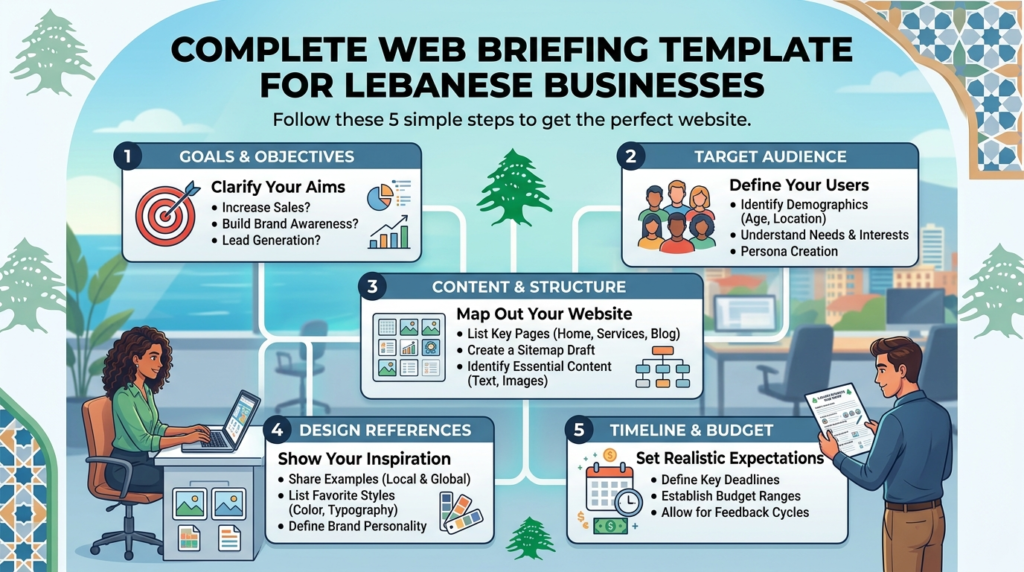
Use the following as a starting template, filling in each section with as much specificity as you currently have:
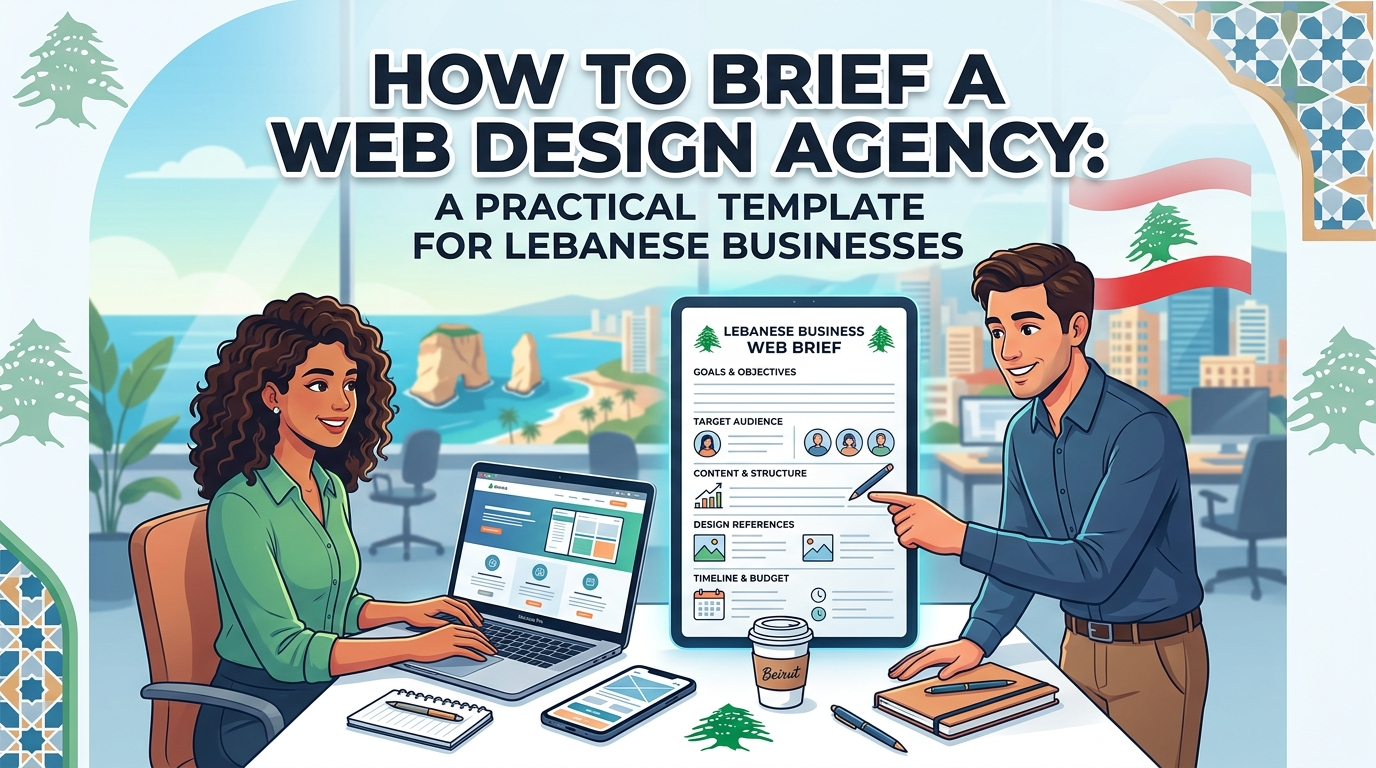
Project Goals: ________________________________ Success Metric: ________________________________ Target Audience: ________________________________ Internal Stakeholders/Approvers: ________________________________ Content Status: ________________________________ Design References (2-3 examples with notes): ________________________________ Must-Have Features: ________________________________ Timeline/Deadline: ________________________________ Budget Range: ________________________________
How to Use It?
Fill in whatever sections you can answer confidently, and leave the rest blank rather than guessing — an honest gap is more useful to an agency than a confident-sounding answer that doesn’t actually reflect the business’s real situation. Bring this filled-in template to your first agency conversation, and expect a genuinely productive discussion to fill in whatever gaps remain, rather than starting entirely from scratch.
Using This as a Website Project Brief Template Going Forward
Adapting the Template for Future Projects
This website project brief template works equally well for a first-time website build, a full redesign, or a smaller scoped addition to an existing site — the same core sections (goals, audience, content, references, timeline) apply regardless of project size, though the level of detail needed in each section naturally scales with project complexity. Keeping a version of this filled-in template on file also makes future updates or a next redesign considerably faster to brief, since much of the foundational information rarely changes significantly between projects.
Sharing the Template With Internal Teams
Businesses with an internal marketing or operations team benefit from treating this website project brief template as a standing internal document, updated periodically rather than recreated from scratch each time a new web project comes up. This keeps institutional knowledge about goals, audience, and brand direction consistent across projects, rather than depending entirely on whichever individual happens to be managing a specific website initiative at a given time.
Turning This Into a Formal Web Design Requirements Document
When a More Formal Document Becomes Necessary?
For larger or more complex projects, particularly those involving multiple stakeholders or a formal procurement process, expanding this brief into a more detailed web design requirements document — covering technical specifications, integration needs, and formal approval workflows — becomes worthwhile. Smaller projects generally do not need this additional formality, and the simpler brief template above remains entirely sufficient for most Lebanese SME website projects.
What a Formal Requirements Document Adds?
A formal web design requirements document typically adds sections covering specific technical integrations needed (CRM, payment systems, existing tools), accessibility and compliance requirements if relevant to the business’s industry, and a formal sign-off process at each project phase. This level of formality serves larger organizations and more complex projects well, while remaining unnecessary overhead for most small business website engagements.
Frequently Asked Questions
A simple, honest document covering the sections above is genuinely sufficient — agencies value clarity and specificity far more than polish or professional formatting. A rough but complete brief outperforms a beautifully formatted but vague one every time.
That’s fine — noting “not yet determined” honestly is more useful than guessing, and a good agency conversation can help clarify these open questions collaboratively rather than requiring every answer to be locked in beforehand.
Enough to give concrete direction — specific reference websites with notes on what you like about each are far more useful than abstract style descriptions. You don’t need design expertise to provide this; you just need to point at examples and explain what appeals to you about them.
Involving key internal stakeholders before finalizing the brief, even briefly, prevents the common problem of conflicting direction emerging later in the project when a stakeholder who wasn’t consulted upfront finally weighs in. A brief that already reflects internal alignment saves significant rework down the line.
A clear brief lets an agency provide an accurate, appropriately scoped quote rather than a padded estimate accounting for uncertainty, and it reduces the expensive mid-project rework that often results from unclear initial requirements. In practice, a strong brief tends to lower total project cost rather than simply speeding up the initial quote.
Ready to Brief Your Next Website Project the Right Way?
A clear brief is the single most effective thing you can do to keep a web design project on time and on budget. Creative 4 All works with Lebanese and GCC businesses to turn a filled-in brief into an accurately scoped project from the very first conversation. Request a Website Quote to put this template to work for your next project.