

Link building has gone through more predicted deaths than almost any other SEO tactic, and yet backlinks remain one of the strongest ranking factors search engines use to judge a site’s authority. What has genuinely changed is not whether links matter, but which links matter. Google’s link-spam algorithm updates, rolled out in waves since 2022 and continuing into 2026, have specifically targeted the low-quality, high-volume placement networks that once made link building feel like a numbers game. For businesses building an SEO strategy today, the practical question is no longer how many links can be acquired, but whether each one is genuinely earned, relevant, and safe to have pointing at a domain.
Why Link Quality Now Matters More Than Volume?
What Changed With Google’s Link Spam Updates?
Google’s SpamBrain-powered link spam updates are specifically designed to detect site-wide link selling, thin guest-post content created purely for link exchange, and coordinated placement networks operating across dozens or hundreds of low-authority domains. Sites caught in these sweeps do not simply see the specific backlink lose value — the association itself can actively work against the site, turning what was purchased as an asset into a liability. This is a meaningful shift from the earlier era of link building, when acquiring links in bulk from almost any source carried real ranking benefit regardless of source quality.
The Real Cost of Low-Quality Backlinks
The cost of a bad link building strategy is not limited to wasted spend on placements that do nothing. A backlink profile dominated by irrelevant, thin, or clearly paid placements can trigger a manual action or algorithmic downgrade that affects the entire domain, not just the specific pages those links point to. Recovering from this kind of penalty is a slow, uncertain process, often taking many months and requiring a formal disavow of the offending links — a considerably more expensive and disruptive outcome than simply building fewer, better links from the outset.
How Google and AI Systems Evaluate Link Context?
Beyond Domain Authority: Relevance and Placement
Domain authority alone was never a complete picture of link value, and it matters even less in isolation today. A link from a high-authority but topically unrelated site carries far less weight than a link from a smaller, genuinely relevant publication whose audience and subject matter align with the linked business. Google’s systems increasingly evaluate the context surrounding a link — the surrounding content’s quality, whether the placement reads as editorially earned rather than paid, and whether the linking site has real traffic and engagement rather than existing purely to host outbound links.
Brand Mentions as a New Signal for AI Search
A genuinely new dimension in 2026 is how AI-powered search systems — Google’s AI Overviews, ChatGPT, Perplexity, and similar tools — use brand mentions as a citation signal, sometimes even when a mention is not accompanied by a clickable link at all. This means a well-placed feature in a relevant, credible publication carries value for AI-driven discovery even in scenarios where it would not have counted as a traditional ranking signal a few years ago. Digital PR earning genuine editorial coverage increasingly serves double duty: traditional backlink value and AI citation value at the same time.
PBN-Style Links vs. Digital PR
Recognizing a Private Blog Network
A private blog network, or PBN, is a coordinated group of websites — often dozens or hundreds — operated under common ownership specifically to sell or distribute backlinks to client sites. These networks are often built on low-cost, generic-looking domains, publish thin or templated content with no real audience, and exist for no purpose other than passing link value. Google’s detection systems have grown considerably more sophisticated at identifying these networks through patterns like shared hosting infrastructure, templated content structures, and unnatural link velocity, making PBN-style links a genuinely risky foundation for any serious backlink strategy in 2026.
What Digital PR Actually Looks Like?
Digital PR earns links and mentions through genuine newsworthiness — original research, useful data, a compelling expert perspective, or a genuinely helpful resource that a journalist or publication chooses to reference because it adds real value to their own content. This looks entirely different from guest-post link building in execution: rather than pitching a pre-written article in exchange for a link, digital PR typically involves pitching a story, a data point, or an expert commentary opportunity to a journalist or editor, with any resulting link a natural byproduct of genuine editorial interest rather than the primary transaction.
What a Modern Link Building Program Looks Like?
Building a Genuine Prospect List
An effective 2026 link building strategy starts with a carefully researched prospect list of sites that are genuinely relevant to the business’s industry, maintain real editorial standards, and show evidence of actual organic traffic and audience engagement rather than existing purely as link-selling vehicles. This kind of research takes considerably more time than acquiring a spreadsheet of thousands of guest-post sites, but the resulting links carry real, durable value rather than the fragile, penalty-prone value of bulk placements.
Internal Linking as a Complement to External Links
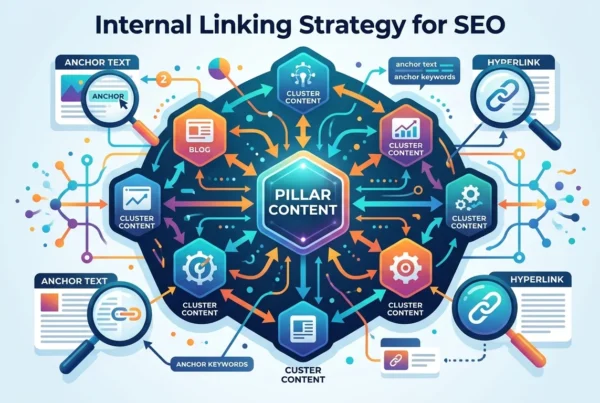
While external link building draws attention to the strategy, a well-structured internal linking system remains one of the most controllable, lowest-risk ways to distribute authority across a site’s own pages. A thoughtful internal linking structure — connecting related content, supporting pillar pages with relevant supporting articles, and ensuring no important page sits orphaned without any internal links pointing to it — amplifies the value of every external link earned, since that incoming authority can then flow through to other relevant pages on the site rather than concentrating entirely on whichever page happened to receive the external link.
Anchor Text and Diversity in a Modern Backlink Profile
Why Over-Optimized Anchor Text Raises Flags?
A backlink profile where every link uses the exact same keyword-rich anchor text looks unmistakably manufactured to search engines, since genuine editorial links naturally vary — sometimes the brand name, sometimes a URL, sometimes a generic phrase like “this resource” or “read more here.” A link building strategy that insists on exact-match keyword anchor text for every placement is itself a signal of manipulation rather than a legitimate signal of relevance, and over-optimized anchor text has been a specific target of Google’s spam detection systems for years.
Building a Natural-Looking Link Profile Over Time
A healthy backlink profile accumulates gradually and shows variety not just in anchor text but in the types of sites linking in, the context of each mention, and the pace at which new links appear. A sudden, unnatural spike in new referring domains, particularly from low-authority or topically unrelated sites, is one of the clearer signals that draws scrutiny from Google’s spam systems. Building links at a pace that reflects genuine ongoing digital PR and content efforts, rather than one large batch acquired all at once, produces a profile that looks — and functions — like the natural byproduct of real business activity.

Measuring Link Building Success Beyond Link Count
Referring Domains vs. Total Backlinks
Referring domains — the number of distinct websites linking to a business, rather than the total number of individual backlinks — is generally a more meaningful metric than raw backlink count, since ten links from ten different genuinely relevant domains carry more real authority than fifty links concentrated on a single low-quality site. Tracking referring domain growth over time gives a clearer picture of a link building program’s actual health than watching the total backlink number alone, which can be inflated by a single site linking to many different pages.
Tracking Referral Traffic, Not Just Ranking Impact
A genuinely valuable link often sends real referral traffic in addition to any ranking benefit, and tracking this traffic gives an additional, independent signal of whether a placement was worth the effort. A link that never sends a single visitor, despite sitting on a seemingly reputable site, is worth investigating further, since it may indicate the placement lacks the real audience engagement that both search engines and genuine business value depend on.
Frequently Asked Questions
No, but the bar has moved considerably. Genuinely useful guest content published on a relevant site with real editorial standards still works well, while bulk guest posting on thin, unrelated, or clearly paid placement sites carries real risk of penalty rather than benefit.
There is no universal number, since link building value depends heavily on quality and relevance rather than raw count. A handful of genuinely earned, relevant links from credible sources typically outperforms dozens of low-quality placements, both for search rankings and for long-term domain safety.
Auditing the existing backlink profile to identify clearly low-quality or spammy links, then using Google’s disavow tool for links that cannot be removed directly, is the standard corrective process. This should be done carefully, since disavowing links that were actually providing value can do more harm than leaving them alone.
Digital PR focuses on earning genuine editorial coverage — a mention, a feature, or a citation — by pitching something genuinely newsworthy to journalists and publications, rather than directly requesting or purchasing a link placement. The resulting links tend to be more durable and carry stronger ranking and AI-citation value than paid placements.
Increasingly yes, particularly for visibility in AI-powered search tools that use brand mentions as a citation signal independent of a clickable link. While an unlinked mention does not pass the same traditional ranking signal as a backlink, it is no longer safe to treat it as having zero value.
Ready to Build a Link Profile That Actually Holds Up?
Link building 2026 rewards quality, relevance, and genuine editorial earning over volume, and getting this wrong can cost far more than it saves. Creative 4 All builds white-hat link building and digital PR programs for businesses across Lebanon and the GCC, focused on links that hold up under scrutiny rather than links that create risk. Get a Free SEO Audit to see where your current backlink profile stands.