In Lebanon, reputation travels fast. A disappointed customer posts a one-star review, a friend screenshots it, and by evening it is circulating in three WhatsApp groups. The reverse is also true: a clinic or restaurant with hundreds of genuine, recent reviews and thoughtful replies wins calls before the customer has even visited the website.
Online reputation management is the work of shaping that first impression deliberately rather than leaving it to chance. Owners who search for “online reputation management Lebanon” usually want exactly that: more good reviews, fewer surprises and a plan for the bad days. For most Lebanese businesses it starts and ends with reviews: getting more of them, answering them well, dealing with fake ones and learning from what customers say. This guide covers online reputation management in Lebanon in practical terms, including Google’s tightened review rules for 2026, what you can and cannot ask customers to do, and how to recover when something goes wrong.
Why Online Reputation Management Matters for Lebanese Businesses?
Lebanon is a small, highly connected market where personal recommendation has always driven buying decisions. Reviews are simply word of mouth that stays visible. When someone searches for a dentist in Achrafieh or a caterer in Jounieh, the star rating, the number of reviews and the tone of the replies shape their choice before they read a single page of your site.
Reviews also influence visibility. Google describes prominence as one of the main factors in local results, and review count and rating contribute to it. A business with steady, genuine reviews generally has a better chance of appearing in the map pack than a similar competitor with a handful of old ones. Our complete guide to local SEO in Lebanon explains how reviews fit alongside categories, proximity and your website.
Finally, reviews are trust signals in the broader sense Google calls E-E-A-T. Real customer experiences, and the way a business responds to them, are among the clearest public evidence that a company is what it claims to be. Our article on E-E-A-T explained goes deeper into how trust is assessed.
Where Your Reputation Actually Lives?
Good review management starts with knowing where customers talk about you. For most businesses in Lebanon, the main places are:
- Google Business Profile: the most visible, because it appears in search and Maps.
- Facebook and Instagram: recommendations, comments and direct messages.
- Industry platforms: TripAdvisor and booking sites for hospitality, delivery apps for restaurants.
- WhatsApp: private, untrackable, but often where complaints start.
You cannot monitor private conversations, but you can make sure every public channel has an owner on your team and a response time target. A review that sits unanswered for three weeks tells readers more about your service than the review itself.
Google’s Review Rules in 2026: What Is Allowed
Google has always required reviews to reflect genuine experiences, and in April 2026 it updated its review policies to spell out several practices more explicitly and enforce them more strictly. Any online reputation management plan for a Lebanese business has to work within these rules, because the penalties now reach beyond individual reviews.
What You Can Do?
You can ask every customer for a review, share a direct review link, remind them by email or WhatsApp, and reply publicly to any review. You can also invite customers to give private feedback, as long as you do not use that feedback to decide who receives the public review request.
What You Must Not Do?
Under Google’s fake engagement policy, businesses must not offer discounts, gifts, free services or any other incentive for a review, including incentives to change or remove a negative one. Review gating, meaning asking customers whether they are happy and only sending satisfied ones to Google, is prohibited. Recent guidance also covers pressuring customers to leave reviews while still on the premises, setting staff quotas or bonuses based on review numbers, and telling customers what to write or which employee to mention. Reviews from employees, owners or relatives are not allowed either.
What Happens if You Break Them?
Google can remove individual reviews, but its documentation now also describes profile-level restrictions: temporarily blocking new reviews, unpublishing existing ones and, in some cases, displaying a public warning on the profile that fake reviews were removed. That warning does far more damage than any single negative review, which is why incentive campaigns are a poor gamble.
How to Get More Google Reviews the Right Way?
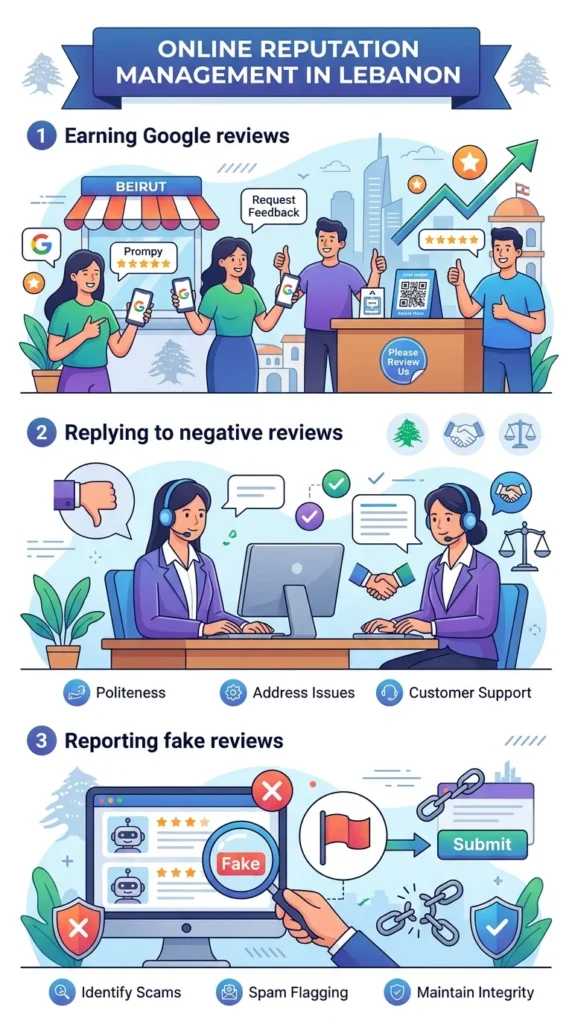
The honest answer to how to get more Google reviews is to ask consistently and make it effortless. Most satisfied customers never leave a review simply because nobody asked at the right moment.
Ask Everyone, Every Time
Build the request into your process so every customer receives it, not only those the team feels good about. Consistency is both compliant and effective: over time, the full picture of your service appears, and a few unhappy reviews are diluted by many genuine ones.
Make It Easy
Copy your review link from your Google Business Profile and use it everywhere it fits: the WhatsApp message confirming a delivery, the invoice email, the appointment follow-up, a card with a QR code customers can scan later on their own phone. Every extra tap loses people.
Time It Well
Ask when the experience is complete and fresh: after the meal, once the order is delivered, a day after the treatment. Avoid pressing people at the counter or handing them a device to review on the spot; a polite message later respects both the customer and Google’s rules.
Ask in the Customer’s Language
Lebanese customers may prefer English, Arabic or French. Send the request in the language you normally use with that customer. A short, personal message works better than a formal template, for example: “Thank you for choosing us today. If you have a minute, we would really value your honest review on Google: [link].”
How to Respond to Negative Reviews?
Every business eventually receives a bad review. Learning to respond to negative reviews calmly is one of the most valuable reputation skills you can build, because future customers read the reply as carefully as the complaint.
Principles That Work
Reply within a few days, in the reviewer’s language, and keep it short. Thank them, acknowledge the specific issue without arguing, explain briefly what you have done or will do, and invite them to continue the conversation privately with a named contact. Never reveal personal details, never accuse the customer of lying in public, and never copy and paste the same reply to every complaint.
A Simple Example
A restaurant receives a review complaining about a 90-minute delivery. A strong reply might read: “Thank you for telling us, and we are sorry your order arrived so late on Saturday. That is not the standard we aim for. We have reviewed what happened with our delivery partner and would like to make it right; please message us on WhatsApp at [number] and ask for Rami.” It is specific, human and constructive.
Extra Care for Clinics and Professional Services
Healthcare providers, lawyers and other professionals must protect confidentiality. Do not confirm that the reviewer is a patient or client, and do not discuss treatment or case details. A neutral reply such as “We take all feedback seriously and invite you to contact our clinic manager directly” protects both the reviewer and your practice.
Fake Google Reviews Removal: What You Can Do
Not every bad review is genuine, and handling false ones is a core part of online reputation management in Lebanon. Competitors, former employees or extortion attempts can produce fake reviews, and Google allows you to report content that breaks its policies. Fake Google reviews removal is never guaranteed, but a methodical approach gives you the best chance.
Report the review from your Business Profile, choosing the policy it violates, such as fake engagement, conflict of interest, off-topic content or harassment. Google’s reviews management tool lets you check the status of your report and, if it is rejected, request one appeal. Keep a record: screenshots, dates, and any evidence that the reviewer was never a customer. While you wait, reply politely and factually, for example noting that you have no record of the visit and inviting the person to contact you.
Be wary of anyone offering to delete reviews for a fee. Only Google removes reviews, and services that claim otherwise either cannot deliver or use methods that put your profile at risk. If a review crosses into defamation or threats, take legal advice rather than fighting it out in public. Repeated unexplained drops in your review count, or a sudden restriction, may also be linked to profile issues; our guide on what to do when a Google Business Profile is suspended covers that situation.
Do Not Forget Positive Reviews
Positive reviews are part of online reputation management too, and they deserve replies. A short, personal thank-you that mentions something specific from the review shows readers that real people run the business, and it encourages others to share their experience. Avoid stuffing replies with keywords such as “best dentist in Beirut”; it reads as spam to customers and adds nothing for search.
Turning Reputation Into Rankings and Enquiries
Online reputation management in Lebanon pays off most when reviews feed into the rest of your marketing. Show selected testimonials on your website near the relevant service, with the customer’s permission, and link to your Google profile so visitors can read the full picture. Note that Google does not display star ratings in search results for reviews a business publishes about itself on its own site, so testimonials on your website are for persuasion, not rich results.
Use the content of reviews operationally. If several customers mention waiting times, fix the waiting times. If many praise a specific service, feature it more prominently. Track a few simple numbers each month: average rating, new reviews, share of reviews answered and average response time. Our Google Business Profile optimization guide explains how reviews work together with photos, posts and categories.
Online Reputation Management During a Crisis
Sometimes a serious incident, a viral post or a wave of complaints hits at once. In that case, pause scheduled promotional content, acknowledge the issue publicly in one clear statement, and give people a single channel for updates. Reply to reviews individually where possible, focusing on facts and actions rather than defence. Then fix the underlying problem and let new, genuine experiences rebuild the picture over the following months. Reputation recovers through consistent service far more than through clever wording.
Frequently Asked Questions
Ask every customer consistently, share a direct review link through WhatsApp, email or a QR code they can scan later, and time the request when the experience is fresh. Avoid incentives, staff quotas and only asking happy customers, all of which break Google’s rules and undermine any online reputation management effort.
No. Google’s policy prohibits any incentive for reviews, including discounts, gifts or free services, and incentives to change or remove negative reviews. Violations can lead to removed reviews, a temporary block on new reviews and even a public warning on your profile.
Reply promptly, politely and in the reviewer’s language. Thank them, acknowledge the issue, explain what you are doing about it and offer a private contact to resolve it. Do not argue publicly or share personal details.
You can report reviews that violate Google’s policies from your Business Profile and track or appeal the report through the reviews management tool. Removal is not guaranteed, so keep evidence, reply factually in the meantime and avoid paid “removal” services.
Reviews contribute to prominence, one of the factors Google uses for local results, alongside relevance and distance. A steady flow of genuine reviews and active replies supports visibility and, just as importantly, persuades searchers to choose you.
Build a Reputation That Brings Customers
Your reputation is already being written by your customers every day. Online reputation management simply means taking part in that conversation: asking every customer for honest feedback, replying with care, dealing calmly with false claims and using what you learn to improve. Done consistently, it strengthens both your local rankings and the trust that turns searchers into clients.
If you would like help building a compliant review process and a stronger local presence, the Creative 4 All team supports businesses with online reputation management in Lebanon in English, Arabic and French. Explore our SEO services in Lebanon